Inventory Cycle Bottoms Out and Rebounds: Singapore Semiconductor Market Outlook for September 2026 and Future Trends
September 21, 2026
401 views
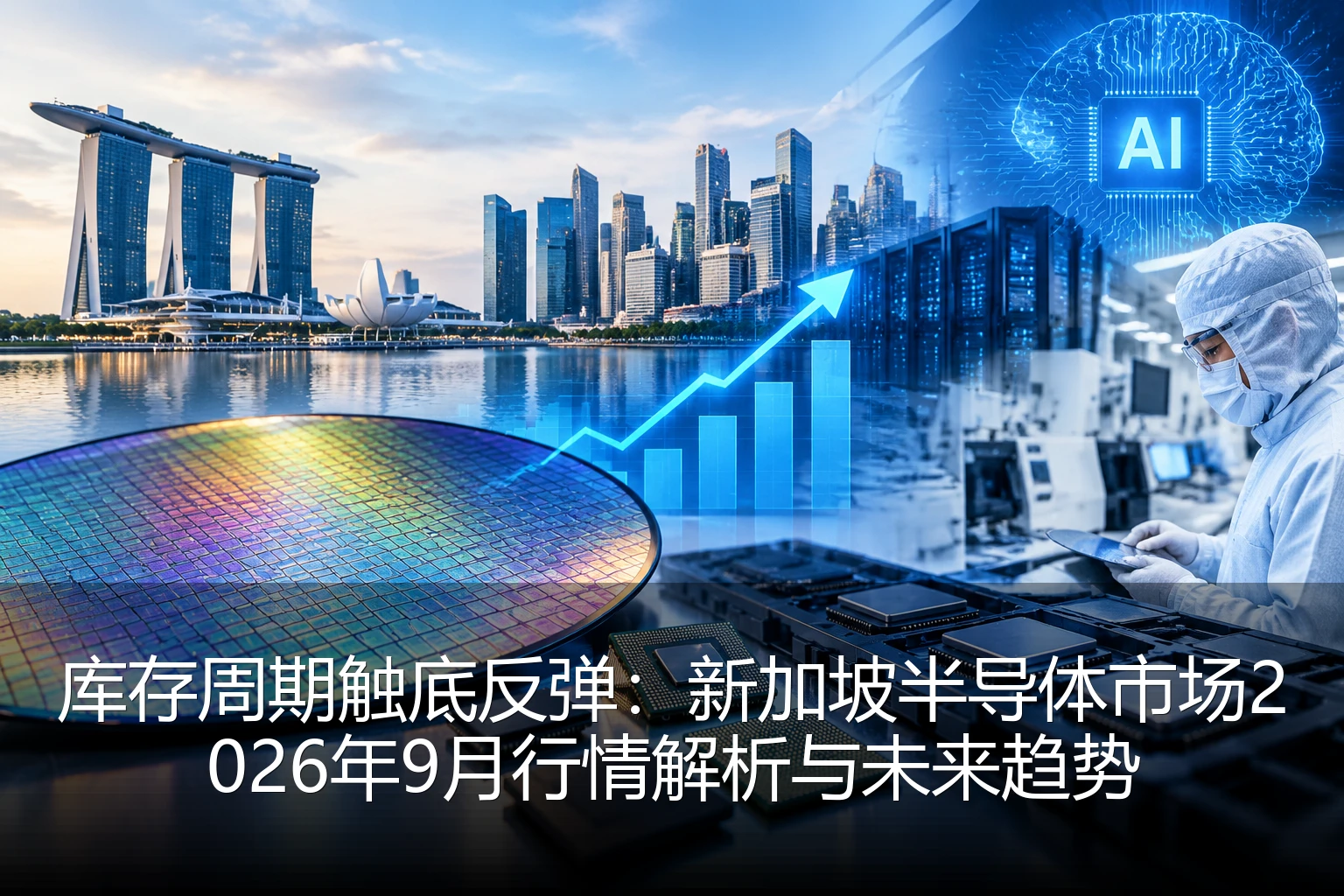
The inventory cycle in the semiconductor industry acts as a barometer reflecting the supply and demand relationship, and its fluctuations directly impact capacity adjustments and price trends across all segments of the industry chain. In September 2026, a key signal emerged from the Singapore semiconductor market: the chip inventory cycle, which had been in a de-stocking phase for a long time, is entering a bottoming and rebound phase. Wafer fab capacity utilization is recovering, memory chip prices have stopped falling, and the packaging and testing industry is preparing for price increases, with AI demand serving as the core driver for market recovery. This change not only marks a new stage for the Singapore semiconductor industry but also provides an important reference for the global semiconductor market trend.
I. Inventory Cycle Bottoms Out: Singapore Wafer Fab Capacity Utilization Recovers, Memory Chip Prices Stop Falling
The core logic of the inventory cycle is the cycle of "supply-demand mismatch": when demand exceeds supply, companies replenish inventory, driving prices up; when supply exceeds demand, companies de-stock, leading to price declines. In the first half of 2026, the global semiconductor market entered a deep de-stocking phase, influenced by weak consumer electronics demand and accumulated AI chip inventory. Singapore, as a core node in the Southeast Asian semiconductor supply chain, saw its wafer fab capacity utilization drop below 65%, and memory chip prices continuously fell.
However, data from September 2026 shows this trend is reversing. According to the latest report from the Semiconductor Industry Association of Singapore (SSIA), wafer fab capacity utilization in Singapore rose from 68% in July to 72% in September, nearing a two-year high since 2024. The most significant increase was seen in the capacity utilization of AI training chips and edge AI chips, with some manufacturers' AI chip utilization reaching as high as 85%, far exceeding the overall average. The main reason for this change is the continuous differentiation of AI demand: although consumer electronics chip inventory is still low, demand for industrial vehicle chips is weak, while demand for AI-related chips is showing explosive growth.
The memory chip market also showed signs of stabilization. After three consecutive months of decline, DRAM spot prices slowed their fall in September, and the prices of some specifications of DRAM even saw a slight rebound; NAND wafer prices rose by 4.55% weekly, marking the largest weekly increase in 2026. Industry analysts point out that memory chip manufacturers are shifting from "de-stocking" to "replenishing inventory." This is partly due to the increased demand for high-capacity storage from AI training servers, and partly because downstream manufacturers began increasing stock after the consumer electronics market hit a bottom.
The wafer material market also delivered positive signals. Silicon wafers, a core material for semiconductor manufacturing, saw continuous price declines in the first half of 2026, but in September, silicon wafers were fully loaded, and some manufacturers even signed ten-year contracts with customers, securing future capacity. This change reflects the wafer fabs' optimistic expectations for future demand and marks the official start of the material price appreciation cycle driven by AI.
II. Packaging and Testing Industry Price Surge: STATS ChipPAC Prepares Price Adjustment, AI Drives Price Revaluation
The packaging and testing industry is a vital link in the semiconductor supply chain. Its price trends often lag behind wafer fabrication and chip design stages, but it is a key indicator reflecting changes in market supply and demand. In September 2026, STATS ChipPAC, a major packaging and testing company in Singapore, announced plans to adjust prices for certain packaging services in the second half of the year, with an expected increase of about 5%-8%. This news attracted widespread market attention and signals that the packaging and testing industry is entering a "price revaluation cycle." StarChip's reasons for price adjustment are twofold: first, the increased demand for AI chip packaging. AI chips typically require more complex packaging technologies, such as 2.5D/3D packaging and hybrid bonding, whose costs far exceed traditional packaging, leading to rising testing and packaging prices; second, tight capacity. As AI chip orders increase, StarChip's capacity utilization rose from 70% in July to 82% in September, nearing full capacity, which drove up testing and packaging prices.
Besides StarChip, another testing and packaging company in Singapore, Amkor Technology, also revealed that its AI chip packaging orders are booked until 2027, with capacity utilization exceeding 90%. The price surge in the testing and packaging industry not only reflects the strong demand for AI but also indicates a shift in profit distribution within the semiconductor industry towards downstream segments. Previously, wafer fabrication and chip design were the main sources of profit, but now, the testing and packaging industry has become a new profit growth point due to technological upgrades and tight capacity.
III. Market Landscape Under AI Demand Diversification: Consumer Electronics Inventory Bottoms Out, Industrial Vehicle Demand Sluggish
The diversification of AI demand is a significant characteristic of the current semiconductor market. On one hand, consumer electronics chip inventory has bottomed out. The inventory turnover days for chips in end products like smartphones and laptops decreased from 120 days in June 2026 to 90 days in September, leading downstream manufacturers to increase stocking. On the other hand, the demand for industrial vehicle chips is sluggish. Inventory levels for industrial control chips and automotive MCUs remain high, with weak demand growth.
This diversification is rooted in differences in end-market demand. Although the consumer electronics market is generally weak, the popularization of AI features (such as AI assistants in smartphones and AI acceleration in laptops) has driven demand for related chips. In contrast, the industrial vehicle market is experiencing slow demand growth due to factors such as the global economic slowdown and the saturation of new energy vehicle penetration. AI training chips and edge AI chips have become the "stars" of the market. Orders for AI chips from companies like Nvidia and AMD continue to increase, boosting inventory replenishment across the entire industry chain.
It is worth noting that the application of RISC-V architecture chips in the AI field is accelerating. In September 2026, the world's first edge AI RISC-V chip was launched, and Chinese manufacturers are also maturing their presence in the RISC-V ecosystem. The open nature of the RISC-V architecture has lowered the barrier to chip design, attracting more enterprises into the AI chip sector and further intensifying the diversification of AI demand.
IV. Supply Chain Adjustment and Future Trends: Resilience of Southeast Asia Stands Out, Policy Support Strengthens
The recovery of the Singapore semiconductor market is inseparable from supply chain adjustments and policy support. In recent years, Southeast Asia has become a vital node in the global semiconductor supply chain due to its geographical location, labor costs, and government support. The Singapore government has increased its support for the semiconductor industry, such as funding semiconductor practical training camps to cultivate chip design engineers, and attracting global capital investment, such as Micron investing $5 billion in Singapore to build a factory, and SK Hynix investing $38.3 billion to expand AI memory production.
These initiatives have not only enhanced Singapore's semiconductor capacity but also strengthened supply chain resilience. Amid the current geopolitical risks facing the global semiconductor supply chain, the advantages of the Southeast Asian supply chain are becoming more evident. Investor confidence in the Singapore semiconductor market is also growing, with the total market capitalization of the Singapore stock market ranking first in Southeast Asia, and SGX (Singapore Exchange) continuously attracting global capital to invest in high-quality ASEAN assets. In the future, the semiconductor inventory cycle may enter a restocking phase, with AI demand continuing to drive the market. However, two risks must be monitored: first, the recovery speed of the consumer electronics market; if consumer electronics demand falls short of expectations, it may affect the inventory cycle's progression; and second, supply chain risks, such as raw material shortages or geopolitical conflicts, which could disrupt market trends.
Conclusion
In September 2026, the semiconductor market in Singapore bottomed out and rebounded, with AI demand becoming the core driver. Rising wafer fab capacity utilization, stabilizing memory chip prices, and rising prices in the packaging and testing industry are signals that the semiconductor market is entering a new cycle. Investors should focus on opportunities related to AI chips, the packaging and testing industry, and the Southeast Asian supply chain; industry professionals need to seize the opportunities presented by the divergence in AI demand to adjust production capacity and product structure. With policy support and enhanced supply chain resilience, the Singapore semiconductor market is expected to continue leading the global semiconductor trend in the future.