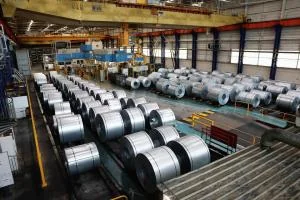
Singapore Semiconductor View: Global Steel Demand Growth Slows, Asia Still Provides Support
Global steel demand growth expectations have been sharply downgraded this year, putting short-term pressure on the ferrous metals sector. However, Asian market demand remains resilient, providing medium- to long-term support for the industry, and Singapore is expected to continue solidifying its position as a ferrous metals trading hub.
Minister of State for Trade and Industry and National Development, speaking at the opening ceremony of Singapore International Ferrous Week, said the global steel demand growth forecast for 2026 has been revised down from about 1.3% earlier this year to 0.3% currently, but the industry expects a rebound to around 2.2% growth in 2027.
He pointed out that the short-term pressures facing the industry mainly come from three aspects: supply chains, costs, and trade policies. The Middle East conflict has disrupted supplies of raw materials such as Direct Reduced Iron (DRI) and Hot Briquetted Iron. Meanwhile, rising energy and freight costs further burden enterprises; trade policy and tariff changes also continue to impact global steel trade flows.
Nevertheless, Asian demand remains a key force supporting the industry outlook. Driven by urbanization, population growth, and large-scale infrastructure construction, Southeast Asia's construction and manufacturing sectors, which are heavy steel users, still have long-term demand.
He also mentioned that India is becoming a major growth market, with steel demand expected to grow about 7% in 2026 and further accelerate in 2027.
Singapore Consolidates Its Position as a Ferrous Metals Trading and Hedging Hub
Singapore is currently one of the world's major ferrous metals trading hubs, hosting over 60 key companies across the value chain, including miners and global traders. Ferrous metals mainly refer to iron-containing metals such as iron and steel; common categories include iron ore, steel, pig iron, scrap steel, and ferroalloys.
In addition, the Singapore Exchange is the largest exchange for seaborne iron ore derivatives outside China, with trading volumes far exceeding the physical market, helping companies hedge risks in real time during market volatility.
Green Metals Forum Debuts
This year, Singapore International Ferrous Week added the Singapore New Energy Metals & Materials Forum for the first time. The forum is co-organized by Green Esteel, a steel company focusing on green and low-carbon development, and Shanghai Metals Market.
The forum will bring together global industry players to exchange views on emerging materials trends and establish strategic partnerships.
He noted that technology application and low-carbon transformation will be key priorities for upgrading the ferrous metals industry. Under its National AI Strategy 2.0, Singapore is investing in computing power, talent, and industrial applications, and has set up over 50 AI Centers of Excellence with industry partners.
For example, global mining group Rio Tinto is currently collaborating with AI Singapore to develop applied AI tools to improve freight invoice processing and shorten transaction processing times for thousands of shipments.
On decarbonization, he said that as a global maritime hub and the home of the Global Maritime Decarbonization Centre, Singapore will continue to promote green shipping corridors and low-carbon alternative fuel testing.