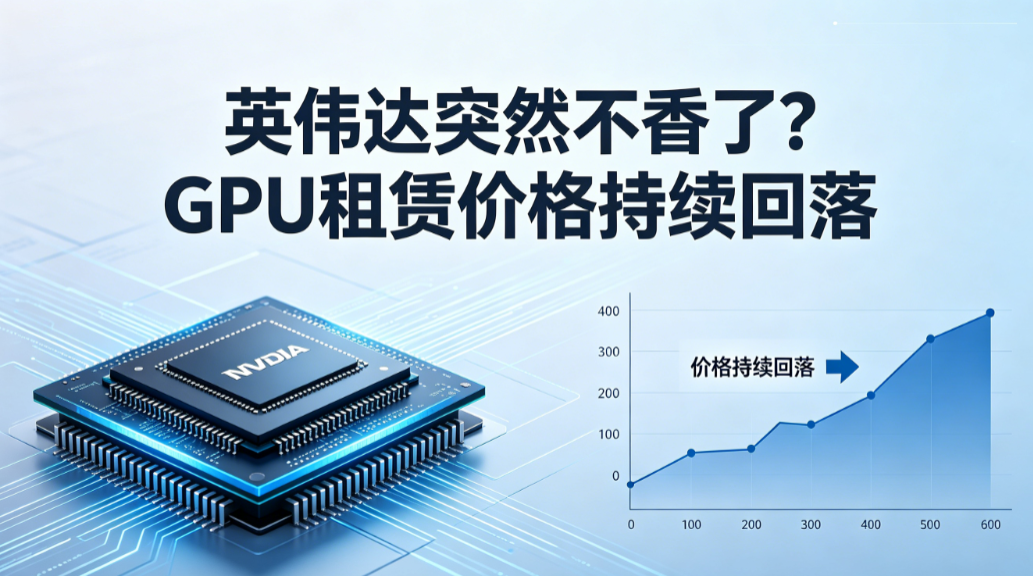
Nvidia's pricing power under pressure: is the computing scarcity myth loosening?
Keywords: Nvidia, AI chips, computing rental, B200, Kalshi, semiconductors, memory chips, AI infrastructure
Introduction
Amid the ongoing AI investment boom, Nvidia has recently shown a trend not fully in sync with industry heat: stock performance has weakened, and market views on its core AI chip pricing power have subtly changed. Previously, Nvidia enjoyed high bargaining power thanks to scarce supply and strong ecosystem; now, as AI infrastructure construction deepens, capital attention is shifting from GPUs themselves to memory chips, underlying architecture and overall system delivery capability. This change is reshaping valuation logic across the entire semiconductor industry.
I. Behind stock divergence: market wind direction changing
From 2026 to date, Nvidia's stock has still gained about 12%, but has fallen about 3% in the past month. In contrast, the VanEck Semiconductor ETF has surged 84% this year and 15% in the past month. This means the market has not abandoned the semiconductor sector but is re-screening beneficiaries. The surge in memory chip companies like Micron and Sandisk shows investors are no longer satisfied with the single narrative of "computing supply" and are betting on a broader hardware demand chain for AI data centers.
This rotation is no accident. As large model training and inference demand expands, AI infrastructure bottlenecks are no longer just GPU count, but also memory bandwidth, storage capacity, power consumption and system integration capability. In other words, industry competition is shifting from "who has the strongest chip" to "who can provide the most complete, stable and cost-effective computing solution."
II. Rental price decline: scarcity narrative faces test
More worthy of attention than stock price is the change in Nvidia's B200 chip rental prices. As a key product supporting hyperscale data centers, the B200 market rental price once rose to $6.11 per hour on May 30, a three-month high. But prices have since fallen, reaching $4.22 as of last weekend.
For the market, price decline is not just short-term fluctuation but may mean substantive loosening of supply-demand relations. Kalshi traders are currently cautious or even pessimistic about Nvidia AI chip rental prices breaking previous highs again, reflecting a reassessment of the "computing scarcity" logic at the trading level. Previously, the market generally believed AI demand would overwhelm supply for a long time, supporting chip prices and CapEx; when rental prices weaken, this logic is challenged.
As industry insiders point out, if scarcity truly existed, prices should remain strong and justify continued expansion; conversely, once supply increases and prices fall, the so-called "computing shortage" is no longer a rule but may be a temporary phenomenon.
III. From "selling chips" to "selling systems": competition focus rising
Goldman Sachs trading desk observations also confirm this trend: the truly benefiting are not necessarily suppliers of just "picks and shovels" but those providing complete systems and monetizing through usage. That is, industry chain value is migrating upstream or toward more complete service models.
This is both an opportunity and pressure for Nvidia. Opportunity lies in it still being the most complete ecosystem and most mature GPU leader; pressure lies in that if market expectations of future scarcity weaken, the core premium part of its valuation will be eroded. Further, ASIC customized chip solutions, cloud vendors' self-developed computing architectures, and new cloud ecosystem rise may divert some demand in the future.
Conclusion
Although Nvidia remains one of the most representative core companies in the AI era, the market clearly no longer unconditionally believes "computing is always scarce." B200 rental price decline, stock pressure and capital rotation to memory chips all indicate: AI hardware investment is moving from single-point explosion to structural revaluation. In the short term, Nvidia still has strong technology and ecosystem moats; but in the medium to long term, whether its pricing power can be maintained depends on whether AI infrastructure demand truly persists, whether supply chain remains tight, and whether the company can stay ahead in more complex industry competition.
Current market changes do not mean the end of the Nvidia story but mean AI investment logic is entering a new stage from "only GPUs" to "full chain." Whoever adapts to this change first is more likely to take the initiative in the next round of competition.